The Search Evolution Ladder · Part 1 · Infographic
Find the words, then sort by date
Text version
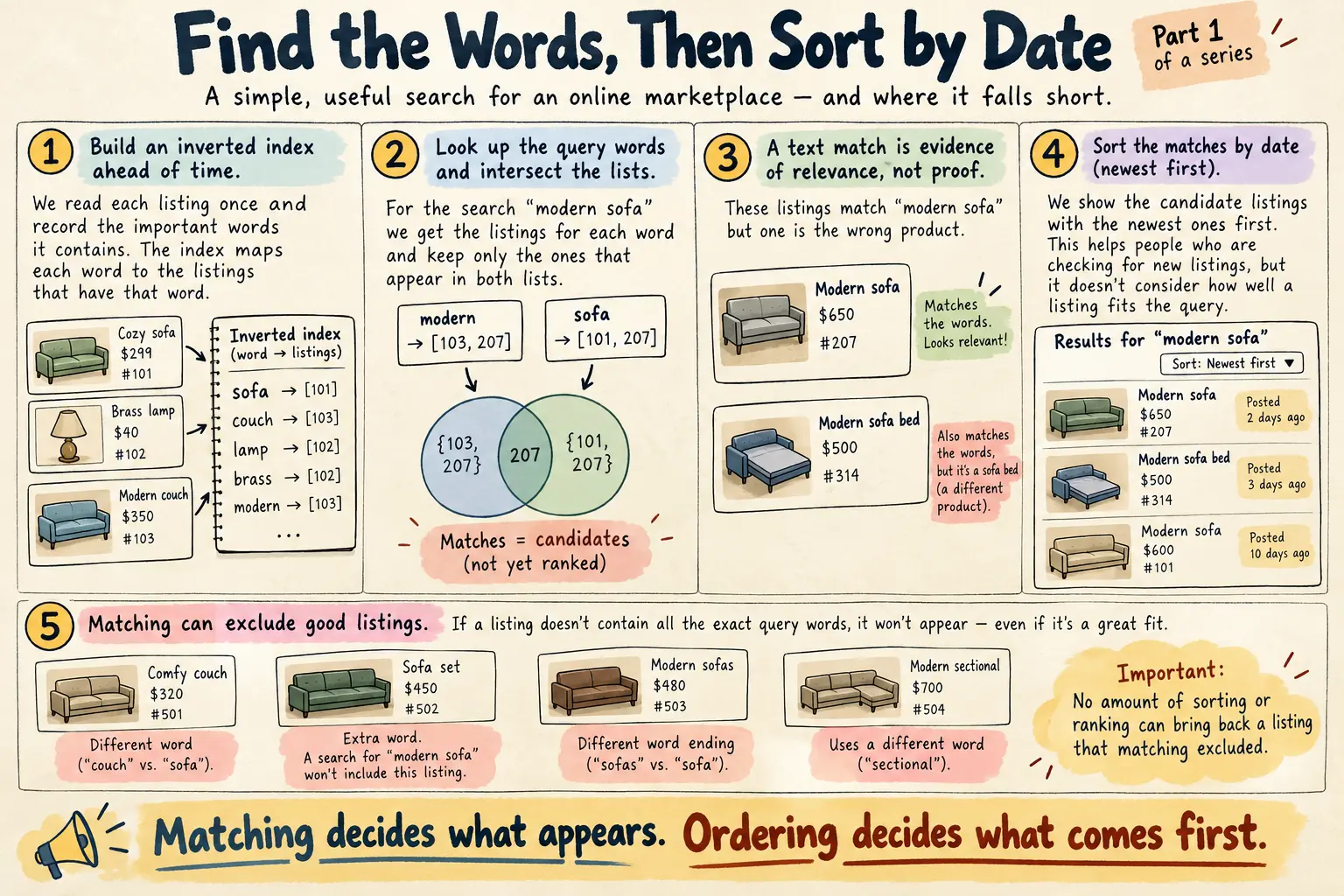
- Build an inverted index ahead of time. Read each listing once and record the words it contains. The index maps each word to the listings that have that word.
- Look up the query words and intersect the lists. For "modern sofa", get the listings for each word and keep only the ones that appear in both lists. Matches are candidates, not yet ranked.
- A text match is evidence of relevance, not proof. A modern sofa and a modern sofa bed both match "modern sofa", but the sofa bed is a different product.
- Sort the matches by date, newest first. This helps people who check for new listings, but it doesn't consider how well a listing fits the query.
- Matching can exclude good listings. A listing without all the exact query words won't appear, even if it's a great fit: a different word ("couch" vs. "sofa"), a different word ending ("sofas" vs. "sofa") or a related word ("sectional"). No amount of sorting or ranking can bring back a listing that matching excluded.
Matching decides what appears. Ordering decides what comes first.